The U.S. illustration market in 2025 appears to be at a crossroads. On one side, speed and automation are tempting everyone with instant results. On the other hand, there’s a hunger for authenticity, the kind of hand-crafted storytelling that an algorithm can’t fake. The tension is real: should illustrators rely on AI for faster workflows, or focus on artistry that conveys a human touch?
This year feels different. Why? Because audiences and brands alike are starting to push back against sameness. They’re tired of scrolling through ads and campaigns that appear to have been generated from the same dataset. They want originality, they want voices, they want stories they can feel in their bones.
At the same time, expectations are rising. Brands aren’t just buying pretty visuals anymore; they’re investing in illustration and design that works across platforms, tells consistent stories, and becomes part of their identity. That means illustrators have to juggle speed, flexibility, and cultural relevance without losing the spark that makes their work unique.
This blog unpacks exactly how the market is shifting in 2025 and, more importantly, what people truly crave from illustrators right now. From 2025 illustration trends to the rise of hybrid workflows and the cultural demand for honesty, we’ll cover the forces shaping the industry and how creatives can stay ahead of the curve.

The illustration market trends 2025 aren’t subtle; they’re reshaping how illustrators work and what clients expect. Here are three shifts you simply can’t overlook.
Remember when it was shocking to hear someone admit they used AI in their art process? Those days are gone. 2025 is the era where hybrid workflows, where AI tools help brainstorm or prototype, while hand-drawn details add the soul, are becoming standard. An illustrator might use AI to rough out a composition, then refine it with linework and textures that scream human authenticity.
This doesn’t mean artistry is dying. It means illustrators are learning to treat AI like an intern, useful for grunt work but incapable of delivering the vision on its own. The demand for illustration services now favors those who can wield both speed and craft without losing their voice.
Brands want more content, delivered faster, and at consistently high quality. That’s not a trend, it’s an expectation. A campaign that once needed three illustrations might now require a dozen variations for web, social, and motion. And yes, they all need to be on brand, on message, and ready yesterday.
This is where adaptability matters. Those offering illustration design services aren’t just competing on talent; they’re competing on workflow. The ability to work efficiently while maintaining originality is becoming the new standard.
Stock imagery fatigue is real. Brands no longer want visuals that feel recycled or anonymous. Instead, they’re craving custom artwork design that belongs only to them. It’s about ownership as much as aesthetics. If an audience spots the same graphic in two different ads, trust evaporates.
That’s why custom graphic design and illustration are rising in value. They give brands a signature look that can’t be duplicated, which means illustrators who can create ownable, unique visuals are finding themselves in higher demand.
Beyond workflow changes, the Illustration Market is being shaped by cultural and stylistic currents that reflect what people care about most right now. Let’s break down some of the most essential illustration trends USA creatives are embracing in 2025.
After years of polished, hyper-digital aesthetics, audiences are gravitating toward visuals that look raw, imperfect, and hand-drawn. Messy linework, visible brushstrokes, and uneven shading add a human touch. Think of it as the visual equivalent of hearing a live acoustic performance after years of auto-tuned pop. It’s refreshing, relatable, and real.
This doesn’t mean sloppy, it means intentionally authentic. Illustrators who lean into imperfection are finding their work resonates more deeply because it feels alive.
Visual storytelling in 2025 is increasingly tied to values. Brands want illustrations that don’t just sell products; they want art that aligns with eco-consciousness, diversity, and social awareness. For example, sustainable brands are commissioning custom artwork design that highlights natural textures, earthy palettes, and narratives rooted in community and care.
This trend is less about “activist art” and more about relevance. An audience that values sustainability will connect with brands whose illustration service reflects those values. Designers who understand this cultural undercurrent are becoming the go-to choice for forward-thinking campaigns.
On one end of the spectrum, we’re seeing bold, maximalist illustration: saturated colors, layered textures, and chaotic, joy-filled visuals that feel like they’re jumping off the page. On the other hand, minimalism remains alive, with clean lines, muted palettes, and uncluttered compositions that provide breathing space in a crowded feed.
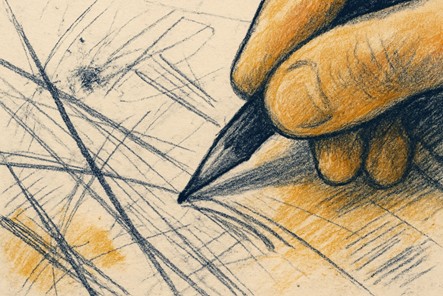
Which one wins? Neither. The market is about balance. Brands are experimenting with both, often within the same campaign. For example, a tech company might use clean, minimalist illustrations and design for its website, while leaning into maximalist, playful visuals for TikTok ads. The ability to switch gears and do it well is a key marker of illustrator relevance in 2025.
Technology isn’t just a tool anymore; it’s the stage. The Illustration Market in 2025 is being pushed by platforms and devices as much as by trends in style. The canvas is expanding, and illustrators are expected to keep up.
Augmented and virtual reality are no longer niche. Retailers, museums, and entertainment brands are commissioning custom artwork design that pops into 3D once viewed through a phone or headset. Imagine a mural that springs to life with animated flora, or a product package that reveals hidden stories when scanned. For illustrators, this means designing with layers in mind; flat composition isn’t enough when depth and motion are part of the brief.
Motion-first illustration is taking the lead, where designs are created with animation potential baked in. Even if you’re offering static illustration design services, clients increasingly want to know, “Can this be animated later?” Whether it’s simple looping motion graphics or improving illustration and design sequences, movement sells.
Brands expect visuals that work everywhere, billboards, social feeds, gaming platforms, and web banners. An illustration might start as a print ad, then be repurposed into an interactive AR filter, then show up as part of an indie game environment. The keyword here is adaptability. The future canvas isn’t paper or screen, it’s every possible touchpoint. And if you can create art that translates across all of them, your illustration service becomes indispensable.
If 2020 was the era of stock imagery overload, 2025 is the backlash. Brands are hungry for visuals they can truly own, and that’s reshaping the illustration market.
The sameness of stock libraries has worn thin. When audiences see the same smiling model or recycled vector asset in three different ads, trust disappears. That’s why the demand for illustration services that deliver one-of-a-kind work is surging. Brands want custom graphic design and illustration that feel unmistakably theirs.
For top brands, illustration is no longer decoration; it’s identity. Think of Mailchimp’s quirky hand-drawn characters or Spotify’s bold editorial visuals. Those aren’t random choices; they’re deliberate illustrations and design strategies that make the brand instantly recognizable. Innovative companies see custom artwork design as the equivalent of a logo system, flexible, scalable, and deeply tied to their voice.
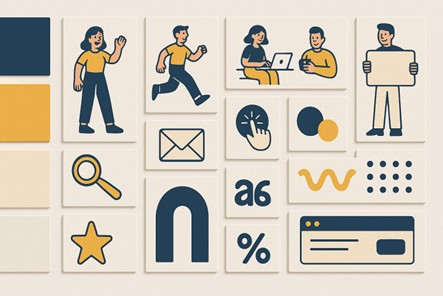
Another shift? Longevity.Instead of hiring an illustrator for a one-time ad, brands are asking for cohesive systems, illustrations that connect across campaigns, platforms, and even product packaging. This means illustrators must think strategically. Can this piece evolve? Can it adapt? Can it be part of a larger library? The new expectation is that illustration design services deliver not just a file but a visual foundation brands can keep building on.
Of course, not everything in the 2025 Illustration Market is a great opportunity. There are challenges creatives don’t always discuss openly, but they shape the industry just as much as the big trends.
AI tools can generate “art” in seconds. Clients know it. And some will use it to push budgets lower. The challenge for illustrators is proving the value of authenticity, originality, and human storytelling. A prompt can’t replace thoughtful artwork, but it can make price negotiations tougher. Illustrators offering illustration design services need to position themselves as strategic partners, not just executors.
Every illustrator has a style. But what happens when a client says, “Can you make it look like X brand?” Striking the balance between honoring your creative DNA and delivering what sells is one of the quiet tensions of 2025. Too much compromise, and you risk losing your voice. Too little, and you risk losing clients.
Trends come and go, but illustrators can’t afford to stand still. The challenge is evolving, as we experiment with 2025 illustration trends, explore AR or motion-first workflows, without erasing the elements that make your work distinct. Reinvention is necessary, but so is authenticity.
The artists who thrive will be those who can adapt while still leaving their fingerprint on every piece.
In a world overflowing with AI-generated polish, audiences are craving something else: humanity. They want the quirks, the flaws, the sketches that feel like they came from a hand, not a machine. The illustration market in 2025 is full of shiny, automated outputs, but the illustrations that resonate most are the ones that feel like a human heart was involved.
Messy linework, imperfect shading, and expressive brushstrokes are no longer mistakes; they’re emotional hooks. They remind viewers that a real artist is telling a real story. People don’t want perfection; they want personality. Consider how audiences respond to doodle-style illustrations in social campaigns or raw, zine-inspired custom artwork designs for activist projects. The emotion is immediate, the connection undeniable.
The takeaway? Illustrators who lean into human-first storytelling rather than sterile precision find their work sticks in people’s minds. It’s not about chasing flawlessness; it’s about creating visuals that feel alive.
One of the strongest illustration market trends 2025 is the demand for distinctiveness. Brands don’t want visuals that could belong to anyone. They want a style so recognizable that audiences know the brand instantly, even without a logo.
Mailchimp’s quirky hand-drawn figures, Slack’s playful custom graphic design, and New Yorker covers with painterly flair all prove the same point: signature illustration is branding. It’s more potent than a color palette, and often more flexible than typography.
The trap is chasing trends. At times, it’s soft gradients; tomorrow, it’s bold neons, and the following week, it’s muted earth tones. Brands that build identities around trend-hopping risk fading into noise. That’s why illustrators offering illustration design services must think beyond one-offs. The question isn’t “What’s cool right now?” but “What will stick?”
Scalability is part of this shift. A strong brand signature isn’t a single drawing; it’s a system. One illustration style has been consistently applied across campaigns, packaging, websites, and social media, evolving without losing its recognition. This is what agencies mean when they talk about visual consistency: a strategy, not a series of files.
Representation isn’t a “trend.” It’s a cultural necessity. Audiences these days expect to see themselves and their communities reflected authentically in illustration. The Illustration Market has moved past tokenism. Now, diverse characters, body types, skin tones, and family structures are baseline expectations.
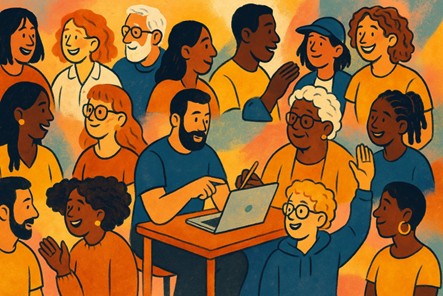
Illustrators are being called on not just as decorators, but as cultural storytellers. The power lies in creating custom artwork design that reflects reality without stereotyping. For example, a children’s book may feature neurodiverse characters in everyday scenarios, or a health campaign may use inclusive illustration and design to show real family dynamics instead of cookie-cutter stock.
This doesn’t just appeal to audiences emotionally; it builds brand trust. When people feel seen, they connect. And in a market where connection drives conversion, authenticity is everything.
Speed sells; clients don’t just want beautiful art, they want assets they can use immediately across multiple platforms. That means illustrations designed for motion, web, and print all at once.
For illustrators, adaptability is as valuable as artistry. A custom graphic design that looks amazing in a poster should also be tweakable for Instagram Reels or an AR filter. Brands expect deliverables that are flexible by design, not rigid one-offs.
This is reshaping what counts as a professional illustration service. It’s not just about making pretty images; it’s about delivering versatile toolkits that plug directly into campaigns. The more future-proof your work is, the more indispensable you become.
The strongest illustrators in the illustration market are combining analog and digital techniques. Hand-drawn sketches combined with digital polish, watercolor textures layered into vector graphics, or traditional pencil work enhanced with AR animation. This kind of hybrid artistry stands out precisely because it feels human while still future-ready.
It’s tempting to stick with what’s comfortable, but brands are watching for freshness. That doesn’t mean abandoning your creative DNA; it means updating your visual voice in ways that stay aligned with 2025 illustration trends. Think of it like evolving a music genre: the same recognizable vibe, but with new instrumentation.
Sometimes the brief isn’t the whole story. A client might ask for “polished assets,” but what they really want is originality that won’t be mistaken for stock. Reading between the lines is part of being a pro. The illustrators offering standout illustration design services are those who ask the right questions and understand the unspoken needs.

The Market Rewards Curiosity. Sketch. Animate. Prototype for AR. Try a custom graphic design that translates into game environments. Experiment with illustrations and designs that double as motion graphics. Experimentation isn’t wasted time; it’s future prep. The illustrators who push their craft into new territories will be the ones who define what “normal” looks like in the next five years.
The U.S. illustration market in 2025 isn’t just shifting, it’s raising the bar. Audiences want visuals that feel authentic, brands expect adaptability across every platform, and inclusivity is no longer optional. This is less about pretty pictures and more about building trust, recognition, and emotional connection through art.
The illustrators who thrive in this climate will be those who maintain their unique voice while aligning with what people and brands truly need. That means blending hand-drawn warmth with digital polish, designing systems instead of one-offs, and embracing cultural storytelling as part of everyday illustration and design.
At the end of the day, connection matters more than perfection. Clients and audiences remember the work that feels alive, relatable, and purposeful, not the most polished file sitting in a folder.
If you’re ready to translate ideas into visuals that resonate, don’t settle for stock or generic shortcuts. Work with professionals who understand where the illustration market trends 2025 are headed and how to create art that actually connects with people.
Looking for more information? Call us at +1 (855) 521-5040 for quick support!


Have a project in mind? Reach out to us, and we’ll help turn your ideas into stunning illustrations.
Tell us what you need, and we’ll create a custom illustration just for you. Reach out today and let's get started!
 +1 (855) 521-5040

Copyright © 2026 360 Illustration House | All rights reserved. Terms And Conditions | Privacy Policy | Refund Policy


 LIVE CHAT
 +1 (855) 521-5040